
What to see in Trieste and its surroundings ?
9 destinations not to be missed
Trieste is a city rich in history, it is a magical place, it was born in a strategic geographical point, the presence of the port has always been a source of contention by the neighboring populations, in fact the sea has been the wealth and the misfortune of this city.
Trieste is called the gateway to Europe, it is the city that acts as a bridge between Europe and the Slavic and Eastern countries, discover its very special charm, above all do not miss the 9 attractions that you will not forget.
Piazza Unità d'Italia
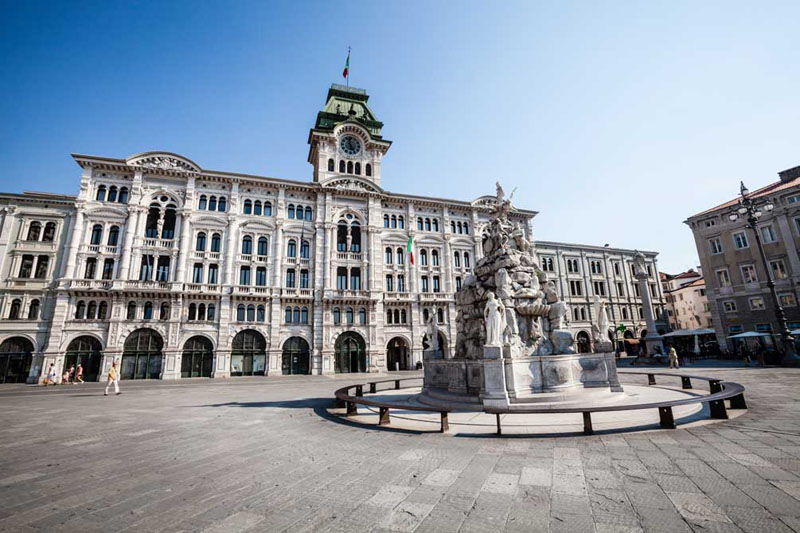
You can't miss visiting Piazza Unità d'Italia, it is the main square of Trieste, it is located in the heart of the city, it has a rectangular plan surrounded by buildings except for one side that looks directly onto the gulf, today it is the largest European square on the sea, the paving has been restored and now it is close to its original appearance.
In the square is the Fontana dei Quattro Continenti (Fountain of the Four Continents), a work by Giovanni Battista Mazzoleni, representing Europe, Asia, Africa and America dominated by Trieste in the form of a winged female figure resting on the rocks of the Karst.
Historical Route
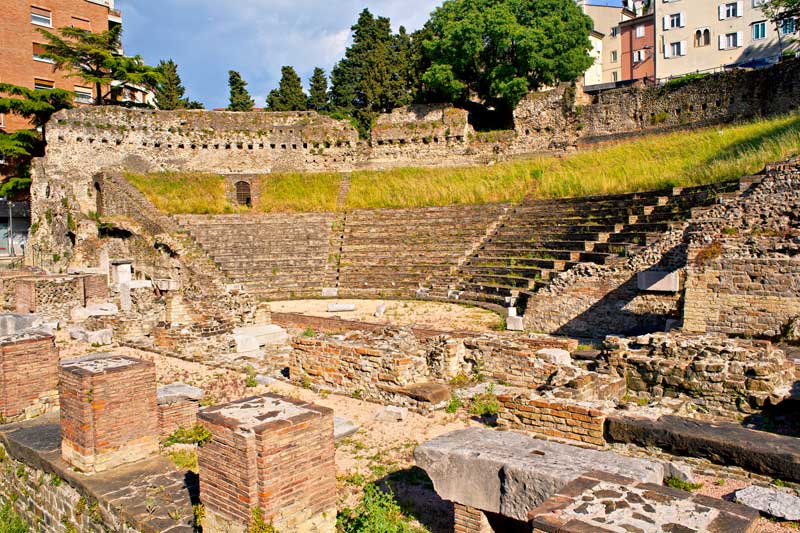
The historic center of Trieste is the Old Town, the oldest part of the city and is made up of three neighborhoods: Cavana, San Giusto and the old Jewish ghetto.
The old city boasts monuments of historical and artistic interest, such as the Roman theater. Dating back to the 1st century BC, it exploits the natural slope of the hill for its steps and could accommodate up to 6,000 people. It is still used today for summer theater performances.
Kleine Berlin is a fascinating network of anti-aircraft tunnels dating back to World War II. These are the largest tunnels open to the public, a unique experience.
Castle and Cathedral of San Giusto
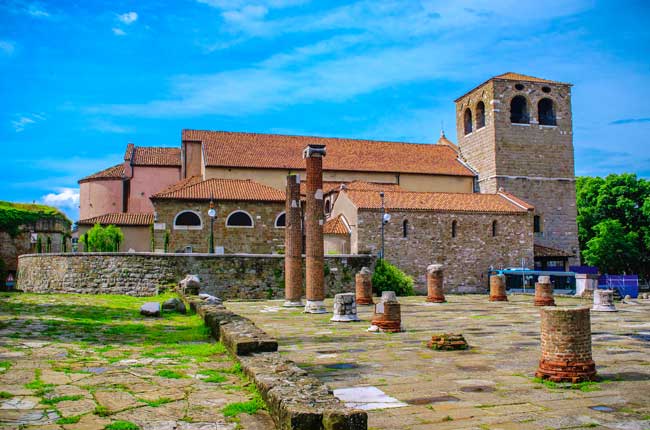
A visit to the Cathedral of San Giusto, the main church of Trieste, is unmissable. It is the result of the union of the churches of Santa Maria and San Giusto. The rose window in karst stone on the façade is characteristic, and the statue of San Giusto is located on the adjacent bell tower.
The Castle of San Giusto is in fact a fortress that was built for the defense of the city, in fact it is located on the highest hill from which one could see the enemies arriving from the sea.
Opicina Tram
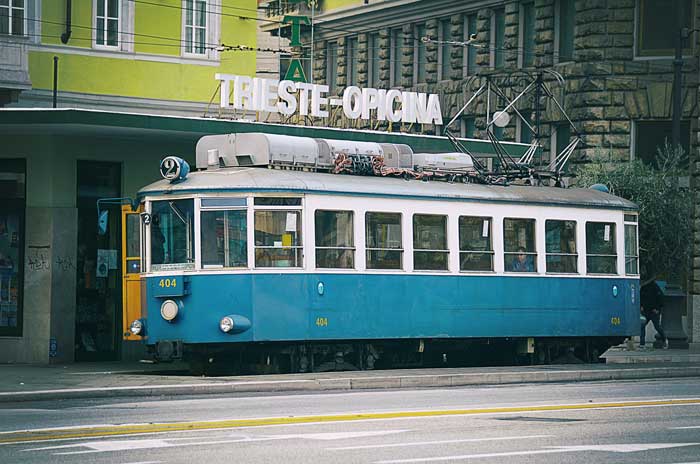
You can't miss a ride on the funicular tramway that connects the city to the hamlet of Villa Opicina. The line was created in the 19th century to connect two areas with a significant difference in altitude (800 meters) that would not have been possible by other means.
The Opicina tram is currently out of service due to repairs. Unfortunately, it's not yet known when it will resume service.
Miramare Castle
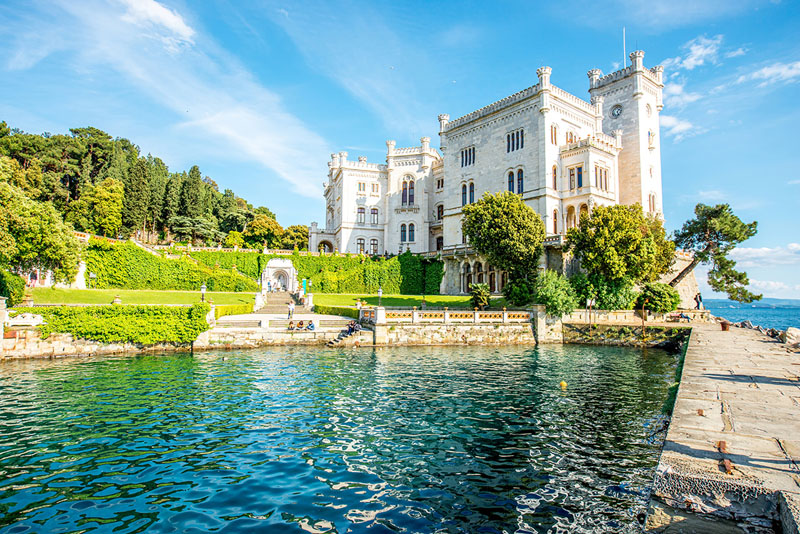
Not far from the city, you can visit Miramare Castle, built to house Maximilian of Habsburg and his wife Charlotte of Belgium. The name Miramare has Spanish origins and literally means "looking at the sea," and the castle is located on a promontory overlooking the Gulf of Trieste.
The park was designed by the architect Carl Junker, and features many plant species chosen by Maximilian of Habsburg himself.
Wine and Flavors Route
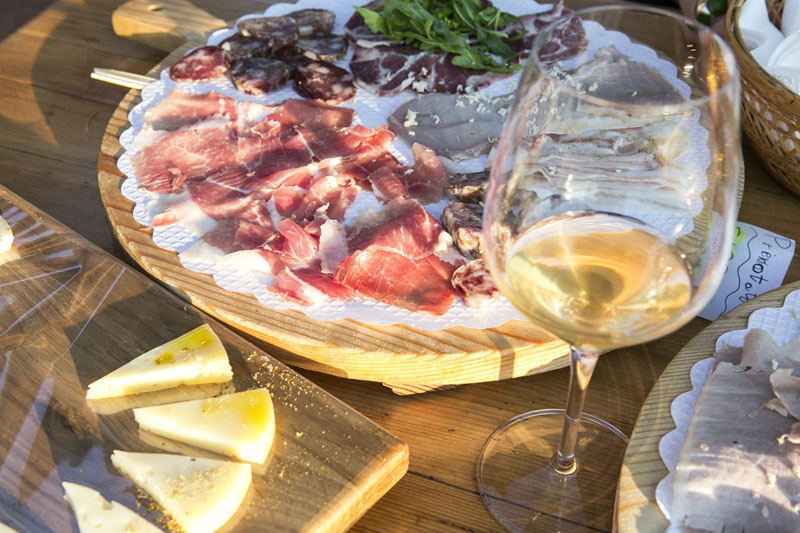
If you love food and wine tours you can't miss the flavors of Trieste such as Jota, a soup of beans, sauerkraut and potatoes, or bread gnocchi or those with goulash, just to name a couple, all washed down with excellent wines now famous throughout Italy such as Terrano, Malvasia or Refosco.
Literary journey
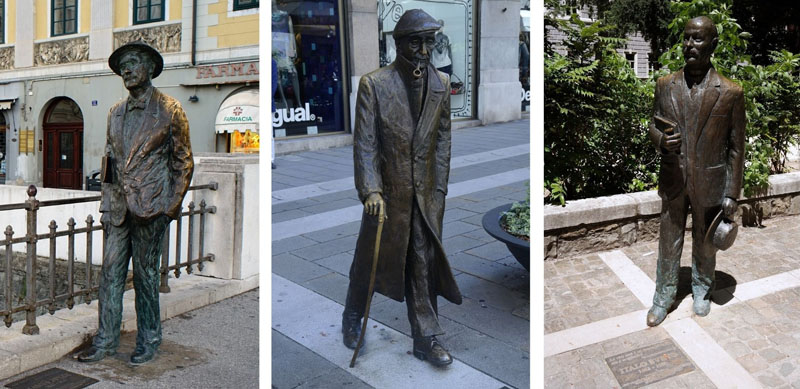
Writers such as Italo Svevo and Umberto Saba were born in Trieste, while others, like James Joyce, chose this city to draw inspiration and live there.
To discover literary Trieste you can enter the Sveviano Museum where the biographies and works of Svevo and Joyce are brought to life, with personal effects also on display, or you can breathe in the artistic atmosphere that once existed in the literary cafés still furnished in the taste of the time.
Trieste Karst
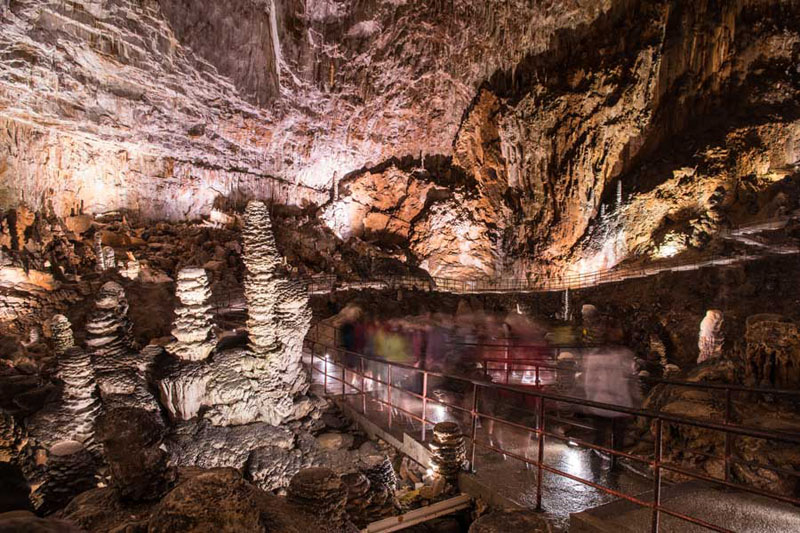
The Karst is a rocky limestone plateau that begins in the Julian Prealps and reaches the Adriatic Sea. The limestone rocks of the karst are subject to erosion, meaning that rain has shaped them over time, creating sinkholes and caves. The most famous are the Gigante Cave, the Slivia Tower Cave, the Škocjan Caves, and the Postojna Cave.
The Grotta Gigante (Gigante cave) is certainly the best known for its size: it is the largest tourist cave in the world, in fact it has been included in the Guinness Book of Records since 1995. Over time, those who take care of the Gigante cave have equipped themselves to allow everyone to visit it in complete safety, there are family routes of just over an hour's walk but also small speleological "expeditions".
If you love being in touch with nature, you can't miss the paths of the Trieste Karst, real karst paths that can be explored on foot or by mountain bike. They are particularly fascinating because the surrounding nature is constantly changing along the way, and the karst vegetation is particularly interesting.